Ebook Scenic Driving Yellowstone and Grand Teton National Park (Scenic Driving Series), by Susan Springer Butler
When you need a book to review now, Scenic Driving Yellowstone And Grand Teton National Park (Scenic Driving Series), By Susan Springer Butler can be a selection since this is among the updated books to check out. It makes certain that when you have new point to think about, you require motivations to fix t. when you have time to review, the books turn into one remedy to take. Also this publication is considered as new book, many people put their trust funds on it. It will understand you to be one of them that are falling in love to review.

Scenic Driving Yellowstone and Grand Teton National Park (Scenic Driving Series), by Susan Springer Butler

Ebook Scenic Driving Yellowstone and Grand Teton National Park (Scenic Driving Series), by Susan Springer Butler
Invest your few moment to read a book even just couple of web pages. Checking out publication is not commitment and also force for everybody. When you do not want to check out, you can get punishment from the author. Check out a publication becomes an option of your different attributes. Many people with reading habit will certainly constantly be enjoyable to review, or on the contrary. For some reasons, this Scenic Driving Yellowstone And Grand Teton National Park (Scenic Driving Series), By Susan Springer Butler tends to be the representative book in this web site.
To overcome the problem, we now provide you the modern technology to download guide Scenic Driving Yellowstone And Grand Teton National Park (Scenic Driving Series), By Susan Springer Butler not in a thick printed data. Yeah, reading Scenic Driving Yellowstone And Grand Teton National Park (Scenic Driving Series), By Susan Springer Butler by online or getting the soft-file only to read can be one of the ways to do. You could not really feel that checking out a publication Scenic Driving Yellowstone And Grand Teton National Park (Scenic Driving Series), By Susan Springer Butler will work for you. However, in some terms, May people effective are those which have reading practice, included this sort of this Scenic Driving Yellowstone And Grand Teton National Park (Scenic Driving Series), By Susan Springer Butler
As the other publication will certainly provide, besides the new lesson it will likewise enhance the perception and also inspirations related to this subject. We're really sure that your option to pick as analysis book will be not wrong. It assumes that the presence of the book will improve this world's literary collections. When many people search for this subject for the book reading, it will end up being the one that influence you to earn new ideas.
Obtain the link to download this Scenic Driving Yellowstone And Grand Teton National Park (Scenic Driving Series), By Susan Springer Butler and also begin downloading. You can really want the download soft file of guide Scenic Driving Yellowstone And Grand Teton National Park (Scenic Driving Series), By Susan Springer Butler by undergoing various other tasks. And that's all done. Now, your resort to read a book is not always taking as well as bring the book Scenic Driving Yellowstone And Grand Teton National Park (Scenic Driving Series), By Susan Springer Butler anywhere you go. You can conserve the soft data in your device that will never ever be far away and also read it as you like. It resembles reading story tale from your device then. Currently, begin to love reading Scenic Driving Yellowstone And Grand Teton National Park (Scenic Driving Series), By Susan Springer Butler and get your brand-new life!
From the Back Cover
Instead of passing through the entrance station and driving straight to Old Faithful, take along Scenic Driving Yellowstone and Grand Teton National Parks to experience the many areas of these two magnificent parks that many visitors miss. This FalconGuide lets you set the pace for your weekend adventure or two-week vacation. Most drives can be completed in an hour or two, allowing you plenty of time to fish a stream, hike a trail, or just sit back and enjoy the spectacular scenery. Wherever you are in the Yellowstone and Grand Teton area, there will be a variety of drives to choose from.
Read more
Product details
Series: Scenic Driving Series
Paperback: 262 pages
Publisher: Falcon; 1st edition (April 1, 1999)
Language: English
ISBN-10: 1560446331
ISBN-13: 978-1560446330
Product Dimensions:
9 x 6 x 0.6 inches
Shipping Weight: 13.4 ounces
Average Customer Review:
4.0 out of 5 stars
12 customer reviews
Amazon Best Sellers Rank:
#1,595,676 in Books (See Top 100 in Books)
We purchased this book as a precursor to actually taking a vacation to both of these National Parks. I had been to both Teton & Yellowstone 'way back in the 1960's when I was a young man with a sleeping bag & a tent - but now my wife & I want to visit these Parks. I'm sure we'll be doing it in a different style than when I did it back in the dim past.First, since the emphasis herein is on driving you don't really need this volume much if you are a camper, hiker, or climber. The places and/or sights are all readily accessable from the typical two wheel drive low clearance motor vehicle. However, the driving directions and the coverage of destinations in both parks appear to satisfy the needs of most people. They have allowed us to do our planning simply and easily, and with an eye towards linking several of the given routes/plans. The breakdown of each Park into bite sized chunks allows one to pick and choose what he or she would like to emphasize in a given trip. No "gee-whiz you gotta see/do this" descriptions mar the book.I have to say too that the lodging data were all very good. That said, the focus was on traditional places to stay for the most part. This, for us, was important as we tend to focus on those kinds of places to stay because they enhance the unique Park experience for us. For example: we stayed at North Rim Grand Canyon this past May in one of the available Park cabins and found we had a wonderful time doing that. So, we plan on trying to replicate that experience somewhat with both Teton and Yellowstone. Thus we've made Park reservations for similar lodging using this book as a guide. It offers plenty of description and data to give one a variety of options in doing this kind of thing.All in all I would give this book a definite recommendation, and I'm going to pass it on to my eldest son for his future use if & when he & their family go out that way.
Amazon is not so great about removing older versions of books and this is one example - if you are going to buy it, get the 2006 version. Now, about the 1999 version....I will agree that it is helpful for driving through the park, but it's only good if you are traveling in the direction she has written it in. For example, if you are traveling a particular leg from north to south but she has written the guide traveling south to north, it is really difficult to follow. The book Yellowstone Treasures by Janet Chapple is written with mile markers regardless of which direction you are traveling in, so I recommend it over this one. Chapple's book is also more comprehensive.
My kids and I just got back from Yellowstone and Grand Teton, and this book made our trip even better than it would have been without it. The funny thing is that I almost didn't buy this book. I refused to be one of those people who experience Yellowstone from my car, so a book called "Scenic Driving" didn't appeal to me at first. But Yellowstone is so huge that even if you plan to hike every day you still need to drive between trailheads, and as a result, you spend a lot of time in the car. My 13-year-old son narrated the entire drive and we ended up seeing things and doing things that we wouldn't have otherwise done. This book helped us understand what we were seeing and led us down roads I would have passed up if it weren't for this book telling us what was around that corner. (By the way, "A Ranger's Guide to Yellowstone Day Hikes" was a great book too!) I can't recommend this book enough. It's a must!
...just returned from driving trip to yellowstone/tetons/jackson hole....having bought 5 different guide books from Amazon.com to insure a trip that covered everything and missed nothing... I feel it is important to let potential driving travelers to yellowstone know how valuable this book is. Of all the books I purchased, this is the only book I used as we traveled the park by car. I used it daily as we went from one location to the next. I kept saying to myself as we toured the park using this book, that I wanted to thank the author and let the public know how valuable this book was. In fact. I saw this book for sale in the national park visitor centers. Get yours before you arrive to ensure a knowlegeable trip. Thanks, susan,
I love the detailed descriptions she writes mile by mile which will be very helpful to have in the car as I drive through the parks myself. It has also prepared me for what to look for.As a "map lover" I like the detailed maps of different sections of the park even more. But . . . I have two complaints: 1) Her maps do not include everything she describes. To me, that is the purpose of a zoomed in map of one section of the park! 2) In her written description she talks way too much about the fire of 1988! But overall I have found the book helpful in my preparation for a visit to both parks and plan to carry it with me.
The book is just okay in my opinion. It is not very specific and doesn't offer much more information than can be obtained through the Park Service. This is not one of the better books as compared to the other series guides.
I purchased many books as a reference for our first trip to Yellowstone, this is the one book I decided to take with us and we used it everyday, the information given was interesting and easy to follow. We felt like we had our own personal guide. Would recommend this book to anyone.
very detailed and helpful. Our trip was fabulous because of this book. We even gave to our friends who are out there now
Scenic Driving Yellowstone and Grand Teton National Park (Scenic Driving Series), by Susan Springer Butler PDF
Scenic Driving Yellowstone and Grand Teton National Park (Scenic Driving Series), by Susan Springer Butler EPub
Scenic Driving Yellowstone and Grand Teton National Park (Scenic Driving Series), by Susan Springer Butler Doc
Scenic Driving Yellowstone and Grand Teton National Park (Scenic Driving Series), by Susan Springer Butler iBooks
Scenic Driving Yellowstone and Grand Teton National Park (Scenic Driving Series), by Susan Springer Butler rtf
Scenic Driving Yellowstone and Grand Teton National Park (Scenic Driving Series), by Susan Springer Butler Mobipocket
Scenic Driving Yellowstone and Grand Teton National Park (Scenic Driving Series), by Susan Springer Butler Kindle
Scenic Driving Yellowstone and Grand Teton National Park (Scenic Driving Series), by Susan Springer Butler PDF
Scenic Driving Yellowstone and Grand Teton National Park (Scenic Driving Series), by Susan Springer Butler PDF
Scenic Driving Yellowstone and Grand Teton National Park (Scenic Driving Series), by Susan Springer Butler PDF
Scenic Driving Yellowstone and Grand Teton National Park (Scenic Driving Series), by Susan Springer Butler PDF
Get Free Ebook Troubleshooting Oracle Performance (Expert's Voice in Oracle)
Why should soft file? As this Troubleshooting Oracle Performance (Expert's Voice In Oracle), many people also will have to get guide quicker. But, sometimes it's so far way to get the book Troubleshooting Oracle Performance (Expert's Voice In Oracle), even in other country or city. So, to reduce you in locating the books Troubleshooting Oracle Performance (Expert's Voice In Oracle) that will support you, we help you by supplying the listings. It's not just the listing. We will certainly offer the suggested book Troubleshooting Oracle Performance (Expert's Voice In Oracle) web link that can be downloaded straight. So, it will certainly not need even more times as well as days to position it as well as other publications.
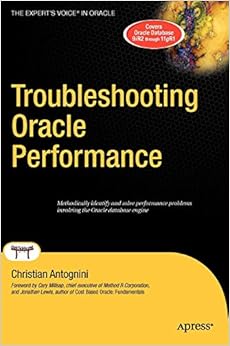
Troubleshooting Oracle Performance (Expert's Voice in Oracle)

Get Free Ebook Troubleshooting Oracle Performance (Expert's Voice in Oracle)
Reading becomes more importance and value in the life societies. It tends to be much more complicated. Every aspect that undertakes the life will entail reading. Reviewing can be checking out everything. In the method, market, library, publication shop, net resources, numerous will certainly show you benefits when reading. Nevertheless, it's even more completed when publication can be your much-loved term to review. We will certainly share Troubleshooting Oracle Performance (Expert's Voice In Oracle) that could make you fall in love to review.
If you have actually found out about this site, it will certainly be far better as well as you have known that the books are typically in soft data types. And now, we will invite you with our brand-new collection, Troubleshooting Oracle Performance (Expert's Voice In Oracle) This is our updated book to give in the listing of this site book. You could take it as the recommendation for your job as well as your daily activity. There is no suggestion ahead join us to discover the challenging publication. But here, you could find it so very easy that it could make you feel completely satisfied.
Related to this scenario, you can truly have the moment to take Troubleshooting Oracle Performance (Expert's Voice In Oracle) as so as feasible. Be among the terrific individuals who take this book also for source. For ensuring you to get this publication, we will show how you can discover as well as obtain the soft documents of it here. Simply comply with the web link that we offer as well as you could straight locate and make deal to obtain this publication. This is only picked to obtain and save it in some gadget that you bring anywhere or in your home or workplace.
Relying on the requirements, this publication additionally showcases the determination of lots of people to make adjustments. The method is by positioning the content as well as just how you recognize it. One that need to be kept in mind is that this book is additionally created by a great author, great writer wit expertise. So, Troubleshooting Oracle Performance (Expert's Voice In Oracle) is much advised for you, a person that expects better method to living design.
About the Author
Since 1995, Christian Antognini has been focusing on understanding how the Oracle database engine works. His main interests range from logical and physical database design, to the integration of databases with Java applications, the query optimizer, and basically everything else related to performance management and tuning. He is working as a senior consultant and trainer at Trivadis AG in Z rich, Switzerland. If he is not helping one of his customers to get the most out of Oracle, he is somewhere lecturing on optimization or new Oracle database features for developers. He is member of the Trivadis Performance Team and of the OakTable Network).
Read more
Product details
Series: Expert's Voice in Oracle
Paperback: 586 pages
Publisher: Apress; 1st ed. edition (June 23, 2008)
Language: English
ISBN-10: 1590599179
ISBN-13: 978-1590599174
Product Dimensions:
7 x 1.4 x 10 inches
Shipping Weight: 2.5 pounds (View shipping rates and policies)
Average Customer Review:
4.4 out of 5 stars
9 customer reviews
Amazon Best Sellers Rank:
#1,809,702 in Books (See Top 100 in Books)
This is an excellent and very helpful book which employs a systematic approach and interesting wrtiting style to keep the reader interested. I was delighted by the chapter about the materialized view, it was a revelation. Excellent, excellent! Thanks, Christian!
Great book.
This is an excellent book on Oracle Performance Trouble Shooting.The book is well presented.Provides lot of insights on Joins ,Partioning and Parallel Processing.Anytuning specialist most likely would refer this book again and again.
I searched for this book "Troubleshooting Oracle Performance" in a native language, but searches haven't gone right and it was necessary to buy it in the original. It was the best my decision.
"Troubleshooting Oracle Performance" is the most thorough, yet physically compact book covering performance tuning with Oracle 9i R2 through 11g R1 on the market. It is quite clear that a great deal of effort was made by the author to carefully verify the tips and test results contained in the book and to organize the material in a logical progression, thus building a bridge between the reader's current understanding to the understanding of complex tuning approaches.What this book accomplishes, which most other performance tuning books seem to miss, is to indicate which performance tuning features are available in each Oracle release (and which are available at no additional licensing cost) as the various performance tuning approaches are discussed. Not only does the book indicate when a feature would be appropriate, but also potential problems ("Pitfalls and Fallacies") associated with each feature.The depth of coverage of Oracle 11g R1 features is surprisingly thorough given the short amount of time which that version has been on the market. A little more detail in a couple areas, such as hacking stored outlines, would have been helpful; at the same time, everyone who reads the book might have a different opinion of what needed additional detail, the book could have grown to 2500 or more pages, and likely would have been obsolete by the time it was published.The Apress Roadmap on the back cover of the book indicates that this book should be read before "Forecasting Oracle Performance", "Expert Oracle Database Architecture", and "Cost-Based Oracle Fundamentals". The "Troubleshooting Oracle Performance" book seems to assume that the Oracle database concepts are well understood. As such, it is probably wise to read "Expert Oracle Database Architecture" first, followed by this book, "Cost-Based Oracle Fundamentals", and finally "Forecasting Oracle Performance".-----I originally reviewed the "Troubleshooting Oracle Performance" book a bit over three years ago, having pre-ordered the book prior to its publication. The original review is quite limited in depth compared to some of my more recent Oracle Database book reviews. I recently decided to purchase the companion PDF file from Apress, as well as to re-read the book so that I could provide a much more detailed book review.Since the time when I wrote my original review of this book I have formally reviewed at least three other books that are Oracle Database performance specific, reviewed a handful of other books that contain Oracle Database performance sections, and briefly viewed and wrote comments about a couple of other performance related books. The "Troubleshooting Oracle Performance" book effectively sets the standard by which all other Oracle Database performance books are measured. The depth of coverage, accuracy of contents, and signal to noise ratio are unparalleled in the Oracle Database performance book category.There are several factors that separate this book from the other Oracle Database performance books on the market:* For every feature that is described to help solve a problem, as many as possible of the benefits are listed, and an equal amount of attention is paid to the potentially wide-ranging problem areas of various solutions. Very few potential problems were overlooked. Some of the other books on the market only describe the potential benefits of implementing a feature, without discussing limitations or unintended side-effects.* For nearly every feature described in the book, the book lists the licensing and version requirements (sometimes to a specific point release such as 9.2.0.4, 9.2.0.5, 10.2.0.3, 10.2.0.4) that are required so that the reader is able to take advantage of the feature ¨C these requirements are often listed early in the description of the feature. The book commonly describes how to accomplish a task in the current Oracle Database release, as well as older releases, if the approach differs. Some of the other books on the market inter-mix features and behaviors in various Oracle Database releases, without clearly distinguishing what will and what will not be available in the reader's environment.* While many strong statements are made about Oracle Database in the book, there is no "hand waiving", and there are very few inaccurate statements. The book uses a "demonstrate and test in your environment" approach from cover to cover. The downloadable scripts library is extensive, and often contains more performance information than what is presented in the book. It is thus recommended to view the scripts and experiment with those scripts while the book is read. The downloadable scripts on the Apress website appear to be corrupt (this corruption appears to affect more than just the scripts for this book). Updated versions of the scripts are available for download from the author's website. In contrast, other books seem to take the approach of "trust me, I have performed this task 1,000 times and never had a problem" rather than the "demonstrate and test in your environment" approach as was used in this book.* Information in this book is densely packaged, without unnecessarily repeating information, and without giving the impression that sections of the book are a paraphrase of some other set of articles. Additionally, the information is well organized into a logical progression of topics, rather than each section of the book appearing as an island of unrelated information.* The well-placed graphics throughout the book support the contents of the book, rather than distract from the information that is described.* In the acknowledgments section at the beginning of the book the author mentioned that his English writing ability is poor and that "I should really try to improve my English skills someday." In the book the only hint that English is not the author' primary language is the repeated use of the phrase "up to" when describing features that exist in one Oracle Database release version or another. The author's use of "up to" should be interpreted at "through" (including the specified end-point) rather than as "prior to" (before the specified end-point). It appears that the author exercised great care when presenting his information on each page. In contrast, some of the other Oracle Database book authors seem to be more concerned with slamming something onto the page so that something else that is more interesting could be introduced, in the process introducing sentences that can best be described as non-sense.The "Troubleshooting Oracle Performance" book covers Oracle releases through 9.2.0.8, 10.1.0.5, 10.2.0.4, and 11.1.0.6. For the most part the information provided in the book applies to Oracle Database 11.1 and above, with exceptions noted for earlier release versions. The author's website effectively extends the book's contents to cover Oracle Database 10.2.0.5, 11.1.0.7, and 11.2.0.x. It is recommended that the Oracle sample schemas are installed in a test database so that the reader is able to experiment with all of the sample scripts provided with the book. The book appears to be mostly directed at DBAs, however sections of the book are appropriate for developers.This review is a bit long (roughly 18 typewritten pages), and might not completely appear on Amazon (see my Oracle blog if the review does not appear in full). As such I will begin the detail portion of the review with the problems/corrections to the book that I have identified (see the author's website for the complete list of errata), describe some of the foundation knowledge/tips found in the book, and then list various data dictionary views/tables, Oracle Database parameters, SQL hints, built-in functions, execution plan elements, and Oracle error messages that are described in the book (many of these items cannot be located in the index at the back of the book, so a page number reference is provided).---Comments, Corrections, and Problems:* The descriptions of both the IS_BIND_AWARE and IS_SHAREABLE columns of V$SQL include the phrase "If set to N, the cursor is obsolete, and it will no longer be used." It appears that this phrase was accidentally added to the description of the IS_BIND_AWARE column. (pages 27-28)* The book states, "Remember, execution plans are stored only when the cursors are closed, and the wait events are stored only if they occurred while the tracing of wait events was enabled." Technically, this behavior changed with the release of Oracle Database 11.1. The PLAN_STAT parameter of the DBMS_SESSION.SESSION_TRACE_ENABLE function, and the PLAN_STAT parameter of the various DBMS_MONITOR functions default to a value of FIRST_EXECUTION. The default behavior in 11.1 and later is to write out the execution plans to the trace file after the first execution (before the cursor is closed), however that parameter may be changed to ALL_EXECUTIONS (plan is written to the trace file after each execution) or NEVER (do not output the execution plan). (page 82)* The book states, "Notice how the number of waits, 941, exactly matches the number of physical writes of the operation HASH GROUP BY provided earlier in the row source operations." The statement in the book is correct, but as written it might be slightly confusing. This statement probably could have been clarified slightly, repeating what was stated earlier about the cumulative nature of the statistics for the parent and child operations. The reader would then more easily understand that the pw=1649 value associated with the "TABLE ACCESS FULL SALES" operation must be subtracted from the pw=2590 value found on the "HASH GROUP BY" operation to arrive at the number 941 mentioned in the book. (page 86)* The book states, "As of Oracle Database 10g, the rule-based optimizer is no longer supported and, therefore, will not be covered here." This sentence, as written, could be misinterpreted. The rule based optimizer still exists in the latest release of Oracle Database, but its use is deprecated, and therefore the use of the rule based optimizer is no longer supported by Oracle Corp., even though it still exists for backward compatibility purposes. Page 174 of the book also states that the rule based optimizer has been desupported. (page 108)* The script that compares the time required to read from table BIG_TABLE using different values for the DB_FILE_MULTIBLOCK_READ_COUNT parameter is subject to at least three potential problems that could throw off the accuracy of the results: 1. Portions of the table may remain cached in the buffer cache between each execution (a warning about this potential issue is provided in the book immediately after the script). 2. The query optimizer may decide to use serial direct path reads ("direct path read" wait event), rather than the commonly expected "db file scattered read" type accesses for the full table scan. Testing seems to indicate that the number of blocks read in a single serial direct path read is related to the DB_FILE_MULTIBLOCK_READ_COUNT value ¨C the maximum number of blocks seems to be the largest power of two that is less than or equal to the DB_FILE_MULTIBLOCK_READ_COUNT value (this might explain the stair-stepped diagram that is included in the book). Serial direct path reads where introduced in Oracle Database 11.1 as a potential replacement for Oracle buffer cache buffered reads when parallel query was not implemented; that change in behavior was apparently not documented prior to the publication of this book. 3. What unrelated blocks are in the buffer cache at the time that the test started might be important. (page 178)* That book states, "Unfortunately, no feature is provided by the package dbms_xplan to query it [the stats$sql_plan repository table]." There is a way to use DBMS_XPLAN.DISPLAY to display an execution plan that was captured in the PERFSTAT.STATS$SQL_PLAN table, but the syntax is a little awkward. (page 204)* The book demonstrates that it is possible to add comment text to a hint block without affecting the hint in that hint block. Ideally, the book would have mentioned that there are risks that hints will be ignored by the optimizer when adding regular comments to hint blocks, especially when the comments are added in front of the hints. (page 254)* "8;" is missing from the first EXPLAIN PLAN FOR SELECT statement. (page 260)* A test case (access_structures_1000.sql) is provided that uses partitioning without first mentioning that the partitioning option may only be purchased for the Enterprise Edition. This is one of the very few instances where the licensing requirements for a feature are not mentioned in the book when the feature is introduced. The licensing requirements are described two pages later. (page 348)* Considering the depth of explanation found in the rest of the book, the book should have mentioned that "ALTER TABLE t SHINK SPACE" is only valid if table t is in an ASSM tablespace. (page 351)* The book references the clustering_factor.sql script, but that script does not exist in the chapter 9 script library. A clustering_factor.sql script does exist in the chapter 4 script library, but the table definition differs from what is shown in chapter 9. This does not appear to be a significant problem because the essential portions of the script appear in the book. (page 375)* The book states, "Note: Full table scans, full partition scans, and fast full index scans executed in parallel use direct reads and, therefore, bypass the buffer cache." This was a correct statement at the time the book was printed. However, Oracle Database 11.2 introduced in-memory parallel execution. The book author briefly mentions this feature in one of his blog articles. (page 500)* The book states that direct path insert does not work with INSERT statements containing a VALUES clause. Since the time when the book was published, the author created a blog article that demonstrates how to use direct path insert for SQL statements that have a VALUES clause. According to the blog article, the behavior changed in Oracle Database 11.1 and again in 11.2. (page 513)The actual errors found in the book are minor in comparison to the amount of information covered by the book.---Foundation Knowledge, and Miscellaneous Tips:* A quote from the book, one of the reasons why application performance is important: "The studies showed a one-to-one decrease in user think time and error rates as system transaction rates increased. This was attributed to a user's loss of attention because of longer wait times." (page 3)* The basic equation that determines the time required for a response from the database server: "response time = service time + wait time" (page 4)* Description of service level agreements, and a description of a method to design and test code to meet service level agreements. (pages 5-8)* A quote that sets the tone for the rest of the book: "So if you do not want to troubleshoot nonexistent or irrelevant problems (compulsive tuning disorder), it is essential to understand what the problems are from a business perspective¡Âªeven if more subtle work is required." (page 11)* Describing the selectivity and cardinality statistics: "selectivity is a value between 0 and 1 representing the fraction of rows filtered by an operation." "cardinality = selectivity * num_rows". (page 13)* The description of each step in the cursor life cycle is explained: open, parse, define output variables, bind input variables, execute, fetch, close. (page 15)* Description of each step in parsing: include VPD predicates; check syntax, semantics, access rights; store parent in library cache; logical optimization; physical optimization; store child in the library cache. (page 18)* Advantages and disadvantages of bind variables (pages 22-23)* Causes of new child cursors when using bind variables: maximum size of the bind variable increases, execution environment changes, adaptive (extended) cursor sharing. (pages 23, 27)* Bind variable peeking was introduced in Oracle 9i. (page 25)* A caution about using bind variables when histograms are present: "On the other hand, bind variables should be avoided at all costs whenever histograms provide important information to the query optimizer." (page 30)* Various profiling applications mentioned: PerformaSure, JProbe; load-testing framework: the Grinder.* Sample TKPROF output, along with the original 10046 extended SQL trace file.* Debugging event numbers are listed in the file $ORACLE_HOME/rdbms/mesg/oraus.msg ¨C but that file is not distributed on all platforms. (page 63)* Structure of 10046 trace files (pages 73-76)* Using TRCSESS to process 10046 trace files. (page 76-77)* Using TKPROF to process 10046 trace files. (page 78-90)* Unlike other books, this book provides a warning about using the EXPLAIN parameter of TKPROF, "In any case, even if all the previous conditions are met, as the execution plans generated by EXPLAIN PLAN do not necessarily match the real ones (the reasons will be explained in Chapter 6), it is not advisable to specify the argument explain." (page 79)* Interesting comment about the SORT parameter for TKPROF ¨C it does not perform a multi-level sort, "When you specify a comma-separated list of values [for the SORT parameter], TKPROF sums the value of the options passed as arguments. This occurs even if they are incompatible with each other." (page 81)* Using TVD$XTAT ¨C a trace file parser developed by the book author. (pages 90-100)* Discussion of the I/O cost model, CPU cost model, noworkload statistics, and workload statistics. (page 111)* A possible explanation why some developers want table columns to appear in a specified order in a table's definition: "The estimated CPU cost to access a column depends on its position in the table." "cpu_cost = column_position*20" (page 117)* Calculated Cost of an operation is approximately IO_COST + CPU_COST / (CPUSPEED * SREADTIME * 1000). (page 118)* When using noworkload statistics, SREADTIME is calculated as IOSEEKTIM + (DB_BLOCK_SIZE / IOTFRSPEED). (page 119)* When SREADTIM, MREADTIM, or MBRC are not available in SYS.AUX_STATS$, the optimizer falls back to noworkload statistics. (page 119)* An ASSOCIATE STATISTICS SQL statement may be used to associate statistics with columns, functions, packages, types, domain indexes, and index types. (page 120)* The ENDPOINT_VALUE of the USER_TAB_HISTOGRAMS view only includes the first 6 bytes of character columns ¨C the book did not mention the ENDPOINT_ACTUAL_VALUE column. (pages 126, 129)* Extended statistics for column groups work only with equality predicates because of the hashing function that is applied to the column group values. (page 132)* An index is always balanced because the same number of branch blocks are present between the root block and all of the leaf blocks. (page 133)* As of Oracle Database 10.1 the default value of DBMS_STATS' CASCADE parameter is DBMS_STATS.AUTO_CASCADE, which allows the database engine to decide when to collect index statistics when the table's statistics are collected. (page 140)* Very through description of the DBMS_STATS package.* Regarding when Oracle determines to automatically collect object statistics, the book states: "By default, a table is considered stale when more than 10 percent of the rows change. This is a good default value. As of Oracle Database 11g, this can be changed if necessary." (page 163)* When describing historical object statistics, the book states: "As of Oracle Database 10g, whenever system statistics or object statistics are gathered through the package dbms_stats, instead of simply overwriting current statistics with the new statistics, the current statistics are saved in other data dictionary tables that keep a history of all changes occurring within a retention period." (page 164)* Interesting flowchart diagram that describes a process of setting initialization parameters and statistics. (page 171)* Factors that might cause fewer blocks to be read than is specified by the DB_FILE_MULTIBLOCK_READ_COUNT parameter: "Segment headers are read with single-block reads. Physical reads never span several extents. Blocks already in the buffer cache, except for direct reads, are not reread from the I/O subsystem." (page 175)* Regarding behavior changes related to specific initialization parameters from one Oracle Database release to another, the book states: "When workload system statistics are available, the I/O cost is no longer dependent on the value of the initialization parameter db_file_multiblock_read_count." (page 177)* A close approximation for the calculation of the auto-tuned DB_FILE_MULTIBLOCK_READ_COUNT parameter is provided in the book, rather than simply stating that the auto-tuned parameter could be affected "if the number of sessions is extremely large" as is stated in the Oracle Database documentation. (page 178)* Nice test case that demonstrates dynamic sampling. (pages 180-183)* For an index access, the Io_cost ¡Ö blevel + (leaf_blocks +clustering_factor) * selectivity * (optimizer_index_cost_adj/100). (page 184)* A danger in modifying the OPTIMIZER_INDEX_COST_ADJ parameter to too low of a value is that the optimizer might calculate the same cost for two different indexes due to rounding in the cost estimates ¨C the optimizer will then select the index that sorts first alphabetically. The book provides a partial test case that demonstrates the problem. (page 185-186)* The purpose of the OPTIMIZER_INDEX_CACHING parameter is often misstated in various books and websites. This book correctly states: The OPTIMIZER_INDEX_CACHING parameter "does not specify how much of each of the indexes is actually cached by the database engine¡Â Values greater than 0 decrease the cost of index scans performed for in-list iterators and in the inner loop of nested loop joins. Because of this, it is used to push the utilization of these operations." (page 186)* Formula showing how the OPTIMIZER_INDEX_CACHING parameter is applied to costing calculations (page 186).* Defining a non-mergeable view: "When the view contains grouping functions in the SELECT clause, set operators, or a hierarchical query, the query optimizer is not able to use view merging. Such a view is called a nonmergeable view." (page 188)* Test case showing why the OPTIMIZER_SECURE_VIEW_MERGING parameter defaults to TRUE, when it is sensible to set that parameter to FALSE for performance reasons, and the privileges that may be assigned to a user so that the user is not subject to the negative performance effects caused by having a value of TRUE set for this parameter. (pages 187-189)* In Oracle Database 9.2, automatic PGA management did not work with a shared server configuration, but it does work with a shared server configuration starting in Oracle Database 10.1. (page 190)* Oracle Database 10.1 and lower artificially limit the amount of memory that a session can allocate when automatic PGA management is enabled (for example 100MB for serial operations), and overcoming that limit requires the modification of hidden initialization parameters. Oracle Database 10.2 and higher remove this artificial limit, allowing PGA allocation to increase as the amount of memory increases. While not stated in the book, setting the OPTIMIZER_FEATURES_ENABLE parameter value to that of an earlier release, 10.1.0.4 for example, causes the PGA allocation to be limited, just as was the case prior to Oracle Database 10.2. (page 190)* As of Oracle Database 10.1, the default value for the PGA_AGGREGATE_TARGET is 20% of the SGA size. (page 190)* The PLAN_TABLE exists by default starting in Oracle Database 10.1 as a global temporary table. The utlxplan.sql script only needs to be run in Oracle Database versions prior to 10.1 ¨C this fact was missed by a couple of recently released books that still indicate that the utlxplan.sql script must be executed to create the PLAN_TABLE. (page 197)* Detailed explanation why EXPLAIN PLAN FOR with a SQL statement using bind variables might generate an incorrect execution plan: no bind peeking, all bind variables are handled as VARCHAR2. (pages 198-199)* Demonstration of a method to simulate DBMS_XPLAN.DISPLAY_CURSOR on Oracle Database 9.2. (page 202)* The book states that understanding 10053 trace files is not as easy task, that the trace file is only generated when there is a hard parse. The book provides three references to other sources to help the reader understand 10053 trace file contents. (page 205)* The book describes setting event 10132 to cause Oracle Database to write out the SQL statement, execution plan, and initialization parameters that affects the optimizer on each hard parse. (page 206)* In an execution plan, the Used-Tmp and Max-Tmp columns are indicated in KB, so the column values must be multiplied by 1024 so that the unit of measure is consistent with the other memory related columns. (page 210)* Detailed walk through of the order of operations in execution plans (pages 224, 227, 229, 231, 232, 235, 237-239, 240, 241, 363, 401, 421, 437, 453-454, 501)* The book describes when a feature requires an Enterprise Edition license (such as SQL plan baselines), Enterprise Edition with the Tuning Pack (such as SQL profiles), and the Oracle Database release version that first supported the feature.* The book correctly states about SQL hints: "Simply put, hints are directives added to SQL statements to influence the query optimizer's decisions. In other words, it is something that impels toward an action, not merely suggesting one." (page 252)* Default prefixes for query block names: CRI$ ¨C CREATE INDEX statements; DEL$ ¨C DELETE statements; INS$ ¨C INSERT statements; MISC$ ¨C Miscellaneous SQL statements like LOCK TABLE; MRG$ ¨C MERGE statements; SEL$ ¨C SELECT statements; SET$ ¨C Set operators like UNION and MINUS; UPD$ ¨C UPDATE statements (page 258)* Table 7-3 contains a cross-reference between certain initialization parameters and equivalent hints that affect a single SQL statement. (pages 262-263)* The text of SQL statements is normalized so that it is case-insensitive and white-space insensitive when SQL profiles are created. This normalization allows the SQL profile to work even if changes in capitalization and white-space result in a different SQL_ID for the SQL statement (and can be set to normalize changes in constants on Oracle Database 11g). (page 271)* The book states about SQL Profiles: "Simply put, a SQL profile stores a set of hints representing the adjustments to be performed by the query optimizer." (page 275)* When both a stored outline and SQL profile exist for the same SQL statement, the stored outline will be used rather than the SQL profile. (page 279)* Procedure for editing a stored outline. (pages 286-288)* Interesting three part test case that demonstrates the execution time difference for a parse intensive SQL statement that is repeatedly parsed with different literal values, with bind variables when cursors are closed, and with bind variables when cursors are held open. (pages 317-324)* While other books advocate the use of non-default values for the CURSOR_SHARING parameter, this book provides the following warning, "Cursor sharing has a reputation for not being very stable. This is because, over the years, plenty of bugs related to it have been found and fixed. Therefore, my advice is to carefully test applications when cursor sharing is enabled." The book does not mention that the CURSOR_SHARING value of SIMILAR is deprecated as of Oracle Database 11.1 (see Metalink (MOS) Doc ID: 1169017.1), however, this book was likely written long before that parameter value was officially deprecated. (page 325)* The book correctly states the default value for the SESSION_CACHED_CURSORS parameter is dependent on the Oracle Database release version, while the Oracle Database documentation for 10.2 incorrectly states the default value, and other books simply pick one of the previously used default values (0, 20, or 50) when discussing the parameter. (page 327)* The book correctly states that there is a change introduced in Oracle Database 9.2.0.5 that changed the default number of cached cursors from being dependent on the OPEN_CURSORS parameter to being dependent on the SESSION_CACHED_CURSORS parameter. The book probably should have stressed that this change in behavior is only related to PL/SQL cursors. (page 331)* Code demonstrations are provided in standard SQL, PL/SQL, C, and Java.* Non-aggregated access paths that use 5 or fewer logical I/Os per row returned are reasonable; non-aggregated access paths that use between 5 and 15 logical I/Os per row returned are probably reasonable; non-aggregated access paths that use more than 15 to 20 logical I/Os per row returned are probably inefficient. Read consistency and row prefetching (array fetch size, the ARRAYSIZE system variable in SQL*Plus) can distort these suggested targets. (pages 341, 343, 376-378)* For a simple execution plan with a single full table scan, if the array fetch size is set to 1, reading each row will increment the number of consistent gets for the session by 1. If the array fetch size is set to a value larger than the maximum number of rows in the table's blocks, the number of consistent gets will be approximately the same as the number of blocks in the table. (page 343)* In Oracle Database 11.1 and above, it is possible to use a virtual column as a partition key. (page 358)* Characteristics of bitmap indexes: cannot be scanned in descending order (SORT ORDER BY operation is required), bitmap indexes always store NULL values (b*tree indexes do not store NULL values when all column values are NULL). (page 371) The clustering factor of bitmap indexes is always set to the number of keys in the index. (page 375) Cannot be used to enforce primary/unique key constraints, do not support row-level locking, space management problems due to updates in releases prior to 10.1, supports efficient index combine operations, supports star transformation. (page 378) A single bitmap index entry might reference thousands of rows ¨C modifying one of those rows may cause concurrency problems for other sessions that need to modify one of the other rows referenced by the same bitmap index entry; bitmap indexes generally work better than b*tree indexes with low cardinality data, but that does not mean that they work efficiently for extremely low cardinality data (unless bitmap combine operations significantly reduce the number of rowids that are used to fetch table rows). (page 379)* As of Oracle Database 10.1 it is possible to specify table columns in index hints, which effectively forces the optimizer to select an index that references the specified column, ex: /*+ index_asc(t (t.id)) */. (page 385)* The book states about index-organized tables: "A row in an index-organized table is not referenced by a physical rowid. Instead, it is referenced by a logical rowid. This kind of rowid is composed of two parts: first, a guess referencing the block that contains the row (key) at the time it is inserted, and second, the value of the primary key." Use ALTER INDEX i UPDATE BLOCK REFERENCES; to update the guess references. (page 404)* Changing an index definition from unique to non-unique could result in the structure of an execution plan changing, even though the index is still used, apparently to help take advantage of block prefetching. (page 423)* Join elimination is introduced in Oracle Database 10.2, which allows the query optimizer to eliminate a join to a table, which then removes the linked table from the execution plan. This is possible if no columns are selected from the linked table, and a validated foreign key links to the table from the other tables specified in the SQL statement. (page 448)* The star transformation is a cost-based transformation, even when a STAR_TRANSFORMATION hint is specified in the SQL statement. (page 456)* When materialized views are created, the ORDER BY clause is only respected during the initial materialized view creation because the ORDER BY clause is not included in the definition that is stored in the data dictionary. (page 461)* Automatic query rewrite that allows the optimizer to take advantage of materialized views is a cost based decision that can be controlled by the REWRITE and NOREWRITE hints. The materialized view must be altered to ENABLE QUERY REWRITE
With all the 5 star reviews, I was excited to get my copy and was disappointed with the contents.I did not find any new techniques, the same old tkprof, explain plan ... If someone wants a real tuning book which you can put to use, try Oracle Performance Firefighting by Craig Shallahamer .
The author Christian Antognini has done a wonderful job in writing a great book on how to systematically analyze issues with Oracle 11g. Let's be honest, Oracle 11g is a beast and take a very long time to master all areas of its core functionality. I have been using Oracle for only a few years and I sometime still consider myself a newbie.The recent version of 11g has added lots of new functionality such as database replay, sql access advisor, sucurefiles, flashback data archiving, tablespace encryption, data masking and so much more. IT sometimes feels that version 11g is a totally new database compared to version 10.x.The great thing about this book which others fail is that it covers all versions of Oracle from version 9i to 11gR1. So even if you are using an older version this book still is extremely valuable to own. It will actually save you money if you are using an older version of Oracle because it can be used as you gradually upgrade to newer versions of Oracle. Another reason to buy it!This book assumes that you already have a good knowledge of using Oracle and goes right into many different scenarios of using different front-end technologies where performance issues can happen and hot to step-by-step figure out where your problem may be coming from.The author focuses on tracing database calls, profiling PL/SQL code, how to review workload statistics and object statistics, how to configure your query optimizer, and one of the most useful sections of the book is Chapter 6 where the author focus on many different execution plans. I also liked Chapter 10 where the author goes through all the different types of SQL commands (joins, nested loops, merge joins, hash joins, etc.) and how they can be improved and optimized.For the size of the book (500+), the author really gives you some great material that can be used for many years of using Oracle. It can be used for the beginner Oracle user (after they get their feet wet) for understanding how to write SQL the optimized way, for the Application Oracle developer and for the DBA as well.I cant see how this book cannot be in your library. A must buy!
BOTH Developers and DBAs can learn from this book. Along the line of "Optimizing Oracle Performance" by Cary Milsap; this books shows by clear examples how to Identify Performance Problems (Chapter 3) and how to solve those problems (the remainder of the book).Developers can learn how to Instrument code to help the tuning process.DBAs can then trace the code and find the bottleneck/waits.This book bridges the gap between Developers and DBAs and points out indirectly that Performance is a teams effort and solution.
Troubleshooting Oracle Performance (Expert's Voice in Oracle) PDF
Troubleshooting Oracle Performance (Expert's Voice in Oracle) EPub
Troubleshooting Oracle Performance (Expert's Voice in Oracle) Doc
Troubleshooting Oracle Performance (Expert's Voice in Oracle) iBooks
Troubleshooting Oracle Performance (Expert's Voice in Oracle) rtf
Troubleshooting Oracle Performance (Expert's Voice in Oracle) Mobipocket
Troubleshooting Oracle Performance (Expert's Voice in Oracle) Kindle
Troubleshooting Oracle Performance (Expert's Voice in Oracle) PDF
Troubleshooting Oracle Performance (Expert's Voice in Oracle) PDF
Troubleshooting Oracle Performance (Expert's Voice in Oracle) PDF
Troubleshooting Oracle Performance (Expert's Voice in Oracle) PDF
Get Free Ebook , by Lisa Chamberlain
Nonetheless, the presence of this publication actually heals that you have to transform that mind. Not all best publications make use of the difficult impact to take. For this reason, you must be so preferable to get over the existence of the book to get all finest. This term associates with the material of this book. Also it has the most favored topic to discuss; the existence of language as well as words that are blended with the history of the writer will truly come correctly
, by Lisa Chamberlain

Get Free Ebook , by Lisa Chamberlain
After couple of time, lastly guide that we as well as you await is coming. So relieved to obtain this terrific publication offered to present in this website. This is guide, the DDD. If you still really feel so difficult to get the printed publication in guide store, you could accompany us once again. If you have ever got the book in soft file from this publication, you can conveniently get it as the recommendation currently.
Undoubtedly, to boost your life top quality, every book , By Lisa Chamberlain will certainly have their specific session. Nevertheless, having specific understanding will make you really feel a lot more certain. When you feel something take place to your life, in some cases, reading e-book , By Lisa Chamberlain could aid you to make calmness. Is that your actual hobby? In some cases yes, yet in some cases will be unsure. Your selection to read , By Lisa Chamberlain as one of your reading publications, can be your appropriate e-book to check out now.
When a person aims to check out the , By Lisa Chamberlain, it will suggest that he or she has started something brand-new, the new knowledge. So, you need additionally to be one of them that can acquire all generosity of reading this book. As known, analysis is thought about as one necessity to do be everybody. If you believe that analysis has to be done only by the students, that's absolutely incorrect. You could deal with the life stopped working.
After getting the link, it will likewise make you really feel so easy. This is not your time to be puzzled. When guide is gathered in this web site, it can be got quickly. You can also save it in different devices so that you could take it as reading products wherever you are. So now, allow's seek for the motivating resources that are easy to obtain. Get the different means from various other to alleviate you feel so very easy in obtaining the sources.
Product details
File Size: 4583 KB
Print Length: 126 pages
Simultaneous Device Usage: Unlimited
Publisher: Chamberlain Publications (Wicca Shorts) (November 23, 2017)
Publication Date: November 23, 2017
Sold by: Amazon Digital Services LLC
Language: English
ASIN: B077Q2TNK1
Text-to-Speech:
Enabled
P.when("jQuery", "a-popover", "ready").execute(function ($, popover) {
var $ttsPopover = $('#ttsPop');
popover.create($ttsPopover, {
"closeButton": "false",
"position": "triggerBottom",
"width": "256",
"popoverLabel": "Text-to-Speech Popover",
"closeButtonLabel": "Text-to-Speech Close Popover",
"content": '
});
});
X-Ray:
Enabled
P.when("jQuery", "a-popover", "ready").execute(function ($, popover) {
var $xrayPopover = $('#xrayPop_23768984537911E99D5F3F3CED827A9E');
popover.create($xrayPopover, {
"closeButton": "false",
"position": "triggerBottom",
"width": "256",
"popoverLabel": "X-Ray Popover ",
"closeButtonLabel": "X-Ray Close Popover",
"content": '
});
});
Word Wise: Enabled
Lending: Not Enabled
Enhanced Typesetting:
Enabled
P.when("jQuery", "a-popover", "ready").execute(function ($, popover) {
var $typesettingPopover = $('#typesettingPopover');
popover.create($typesettingPopover, {
"position": "triggerBottom",
"width": "256",
"content": '
"popoverLabel": "Enhanced Typesetting Popover",
"closeButtonLabel": "Enhanced Typesetting Close Popover"
});
});
Amazon Best Sellers Rank:
#17,330 Paid in Kindle Store (See Top 100 Paid in Kindle Store)
It's worth mentioning in the subtitle that this is a vegetarian cookbook. Also that recipes aren't rooted in historical tradition.
I know this was labeled as for beginners, which I am, but I thought it would be a collection of recipes. Instead this was mostly a guide based on wiccan philosophy. The author talks about vegetarian and organic, fresh and local. All of that is good I guess but still not what I thought I was paying for. A part of why I didn't enjoy this as much was because it only had a few recipes. And some of those were for kitchen cleaners instead of food. I don't feel like this is necessary if you already have a respect for nature and let that factor into how you source/prepare your food.
This is a great book to open your eyes to kitchen witchery. Mrs. Chamberlain is an excellent author and is easy to understand. I recommend all of her books to my witchy friends.
Excellent book for the Wiccan Kitchen and well written. Good for the beginner and even for the advanced Witch. Some things were new to me and some I had known before. Very good book for any Witches Kitchen.
It’s a decent book unlike any others I’ve had but relatively beginnerDon’t have much more to sayThe cover is beautiful and had me by how well it was designed
I enjoyed this quick read. It helped me realize all the potential in the kitchen to conduct magick. I am definitely going to to continue my Wiccan journey in the kitchen with more in depth books! I am happy I read this beginner book and recommend to all those who are interested. Can't beat the kindle price!
This book was an excellent read. I found myself emersed in the content for hours and excited by her wisdom. I would recommend this book to the expert and novice alike!
Was hoping for more recipes but still an amazing read.
, by Lisa Chamberlain PDF
, by Lisa Chamberlain EPub
, by Lisa Chamberlain Doc
, by Lisa Chamberlain iBooks
, by Lisa Chamberlain rtf
, by Lisa Chamberlain Mobipocket
, by Lisa Chamberlain Kindle
, by Lisa Chamberlain PDF
, by Lisa Chamberlain PDF
, by Lisa Chamberlain PDF
, by Lisa Chamberlain PDF
Download PDF Ouch!: The Weird & Wild Ways Your Body Deals with Agonizing Aches, Ferocious Fevers, Lousy Lumps, Crummy Colds, Bothersome Bites, Breaks, Bruises & Burns, by Joe Rhatigan Anthony Owsley
Schedule, an among the tricks to enter the new world always is cooperated a good way. Even you actually admire of this book, you may not obtain anything from here. One way is just by taking the soft file of Ouch!: The Weird & Wild Ways Your Body Deals With Agonizing Aches, Ferocious Fevers, Lousy Lumps, Crummy Colds, Bothersome Bites, Breaks, Bruises & Burns, By Joe Rhatigan Anthony Owsley to review and check out the book to end up. Understanding exactly what the author utter could aid you to know as well as get the benefits of this publication. So, it doesn't need the magic methods to obtain inspirations. It doesn't need to take more times and also much money to obtain this publication as your collection.

Ouch!: The Weird & Wild Ways Your Body Deals with Agonizing Aches, Ferocious Fevers, Lousy Lumps, Crummy Colds, Bothersome Bites, Breaks, Bruises & Burns, by Joe Rhatigan Anthony Owsley

Download PDF Ouch!: The Weird & Wild Ways Your Body Deals with Agonizing Aches, Ferocious Fevers, Lousy Lumps, Crummy Colds, Bothersome Bites, Breaks, Bruises & Burns, by Joe Rhatigan Anthony Owsley
Come again, the book that is not only becomes the tool or fashion yet additionally a true friend. What kind of buddy? When you have no pals in the lonely when you require something accompanying you when in the evening prior to resting, when you really feel so burnt out when awaiting the lists, a publication could come with you as a real good friend. And also among the true buddies to really advise in this website will certainly be the Ouch!: The Weird & Wild Ways Your Body Deals With Agonizing Aches, Ferocious Fevers, Lousy Lumps, Crummy Colds, Bothersome Bites, Breaks, Bruises & Burns, By Joe Rhatigan Anthony Owsley
Well, currently allow's see exactly how the book will certainly be presented for you. Ouch!: The Weird & Wild Ways Your Body Deals With Agonizing Aches, Ferocious Fevers, Lousy Lumps, Crummy Colds, Bothersome Bites, Breaks, Bruises & Burns, By Joe Rhatigan Anthony Owsley is the one that can influence you to have much better time to kick back. So, what you enter the free time is not just relaxing but also extra knowledge. Expertise and also experience are very worthwhile and also they will be timeless. The presence of this book can support you to have that classic well worth. Really priceless and important are just what you could also obtain from reading this book.
Related to why this Ouch!: The Weird & Wild Ways Your Body Deals With Agonizing Aches, Ferocious Fevers, Lousy Lumps, Crummy Colds, Bothersome Bites, Breaks, Bruises & Burns, By Joe Rhatigan Anthony Owsley exists first here is that this referred publication is the one that you are searching for, typically aren't you? Lots of are also same with you. They likewise seek for this great publication as one of the resources to read today. The referred publication in this kind is mosting likely to offer the preference of knowledge to obtain. It is not only the specific culture but additionally for the general public. This is why, you must take place in collecting all lessons, and info about exactly what this publication has actually been created.
After obtaining the soft file, you can conveniently create brand-new inspirations in your mind. It is challenging to obtain the book in your city, most likely furthermore by checking out the shop. Visiting the shop will not additionally offer warranty to get the book? So, why don't you take Ouch!: The Weird & Wild Ways Your Body Deals With Agonizing Aches, Ferocious Fevers, Lousy Lumps, Crummy Colds, Bothersome Bites, Breaks, Bruises & Burns, By Joe Rhatigan Anthony Owsley in this site? Also that's only the soft data; you can actually feel that guide will certainly be so valuable for you and life about.
From School Library Journal
Gr 3-6–Rhatigan describes the different ways in which humans become sick or injured, along with how the human body reacts and what can be done to help the healing process. An appropriate disclaimer cautions readers that the book is not intended to be used for self-diagnosis and encourages children to seek an adult when something is wrong. The medical information and terms are clearly explained. Colorful chapter and topic headings nicely organize the information into logical sections. Rhatigan covers parts of the body, bacteria and viruses, poisonous plants, bruises, bleeding, and more. In addition to including the symptoms, the author details how a doctor would treat the problem. Ways to prevent the illness/injury from getting worse are noted, along with a somewhat subjective scale rating the levels of pain readers might feel when experiencing each medical issue. A hefty combination of photographs, diagrams, and drawings augments the informative text, but not all the images are captioned. Owsley uses lots of color in his expressive, playful, and at times cartoon artwork. Unfortunately, the appended glossary does not give pronunciations for terms. The helpful index and table of contents, however, are a plus. Rhatigan and Owsley transform what could be a dry subject into a lively, educational read for children who are curious about common ailments and injuries.–Lynn Vanca, Freelance Librarian, Akron, OHα(c) Copyright 2013. Library Journals LLC, a wholly owned subsidiary of Media Source, Inc. No redistribution permitted.
Read more
About the Author
Joe Rhatigan has authored more than fifteen books for children and adults, including DON'T UNRAVEL WHEN YOU TRAVEL and OUT-OF-THIS-WORLD ASTRONOMY. He has also produced several best-selling books and series, including 101 PLACES YOU GOTTA SEE BEFORE YOU'RE 12!, WHITE HOUSE KIDS, and the My Very Favorite Art Book series. Joe has been a poet, a teacher, a marketing manager, and a newspaper boy. He lives in Asheville, North Carolina with his wife and three children.
Read more
Product details
Age Range: 8 - 12 years
Grade Level: 3 - 7
Lexile Measure: 1140L (What's this?)
amznJQ.available('jQuery', function() {
amznJQ.available('popover', function() {
jQuery("#lexileWhatsThis_db").amazonPopoverTrigger({
showOnHover: true,
showCloseButton: false,
title: 'What is a Lexile measure?',
width: 480,
literalContent: 'A Lexile® measure represents either an individual's reading ability (a Lexile reader measure) or the complexity of a text (a Lexile text measure). Lexile measures range from below 200L for early readers and text to above 1600L for advanced readers and materials. When used together Lexile measure help a reader find books at an appropriate level of challenge, and determine how well that reader will likely comprehend a text. When a Lexile text measure matches a Lexile reader measure, this is called a "targeted" reading experience. The reader will likely encounter some level of difficulty with the text, but not enough to get frustrated. This is the best way to grow as a reader - with text that's not too hard but not too easy.',
openEventInclude: "CLICK_TRIGGER"
});
});
});
Hardcover: 80 pages
Publisher: Charlesbridge (August 1, 2013)
Language: English
ISBN-10: 1623540054
ISBN-13: 978-1623540050
Product Dimensions:
9.6 x 0.6 x 10.3 inches
Shipping Weight: 1.4 pounds
Average Customer Review:
5.0 out of 5 stars
3 customer reviews
Amazon Best Sellers Rank:
#630,200 in Books (See Top 100 in Books)
I love this book for my office. Kids (especially boys) love the pictures and the parents like the explanations. This is the 2nd one I purchased since the 1st one was taken (hopefully by someone who really loved it.)
Fantastic introduction into first aid care for my children!
This is a really great book. I have a 5 year old who is obsessed with being a doctor, first aid, nurse, being sick, etc and she absolutely love this book. We checked it out at the library, but having to order it on Amazon. It's a great book for reference for those future doctors. We are anti- vaccine, so I appreciate the open view to vaccines. The information is good general basic information for kids who ask a lot of questions and want to know when it comes to being sick, trauma, etc. And the graphic are kid friendly. I highly recommend it.
Ouch!: The Weird & Wild Ways Your Body Deals with Agonizing Aches, Ferocious Fevers, Lousy Lumps, Crummy Colds, Bothersome Bites, Breaks, Bruises & Burns, by Joe Rhatigan Anthony Owsley PDF
Ouch!: The Weird & Wild Ways Your Body Deals with Agonizing Aches, Ferocious Fevers, Lousy Lumps, Crummy Colds, Bothersome Bites, Breaks, Bruises & Burns, by Joe Rhatigan Anthony Owsley EPub
Ouch!: The Weird & Wild Ways Your Body Deals with Agonizing Aches, Ferocious Fevers, Lousy Lumps, Crummy Colds, Bothersome Bites, Breaks, Bruises & Burns, by Joe Rhatigan Anthony Owsley Doc
Ouch!: The Weird & Wild Ways Your Body Deals with Agonizing Aches, Ferocious Fevers, Lousy Lumps, Crummy Colds, Bothersome Bites, Breaks, Bruises & Burns, by Joe Rhatigan Anthony Owsley iBooks
Ouch!: The Weird & Wild Ways Your Body Deals with Agonizing Aches, Ferocious Fevers, Lousy Lumps, Crummy Colds, Bothersome Bites, Breaks, Bruises & Burns, by Joe Rhatigan Anthony Owsley rtf
Ouch!: The Weird & Wild Ways Your Body Deals with Agonizing Aches, Ferocious Fevers, Lousy Lumps, Crummy Colds, Bothersome Bites, Breaks, Bruises & Burns, by Joe Rhatigan Anthony Owsley Mobipocket
Ouch!: The Weird & Wild Ways Your Body Deals with Agonizing Aches, Ferocious Fevers, Lousy Lumps, Crummy Colds, Bothersome Bites, Breaks, Bruises & Burns, by Joe Rhatigan Anthony Owsley Kindle